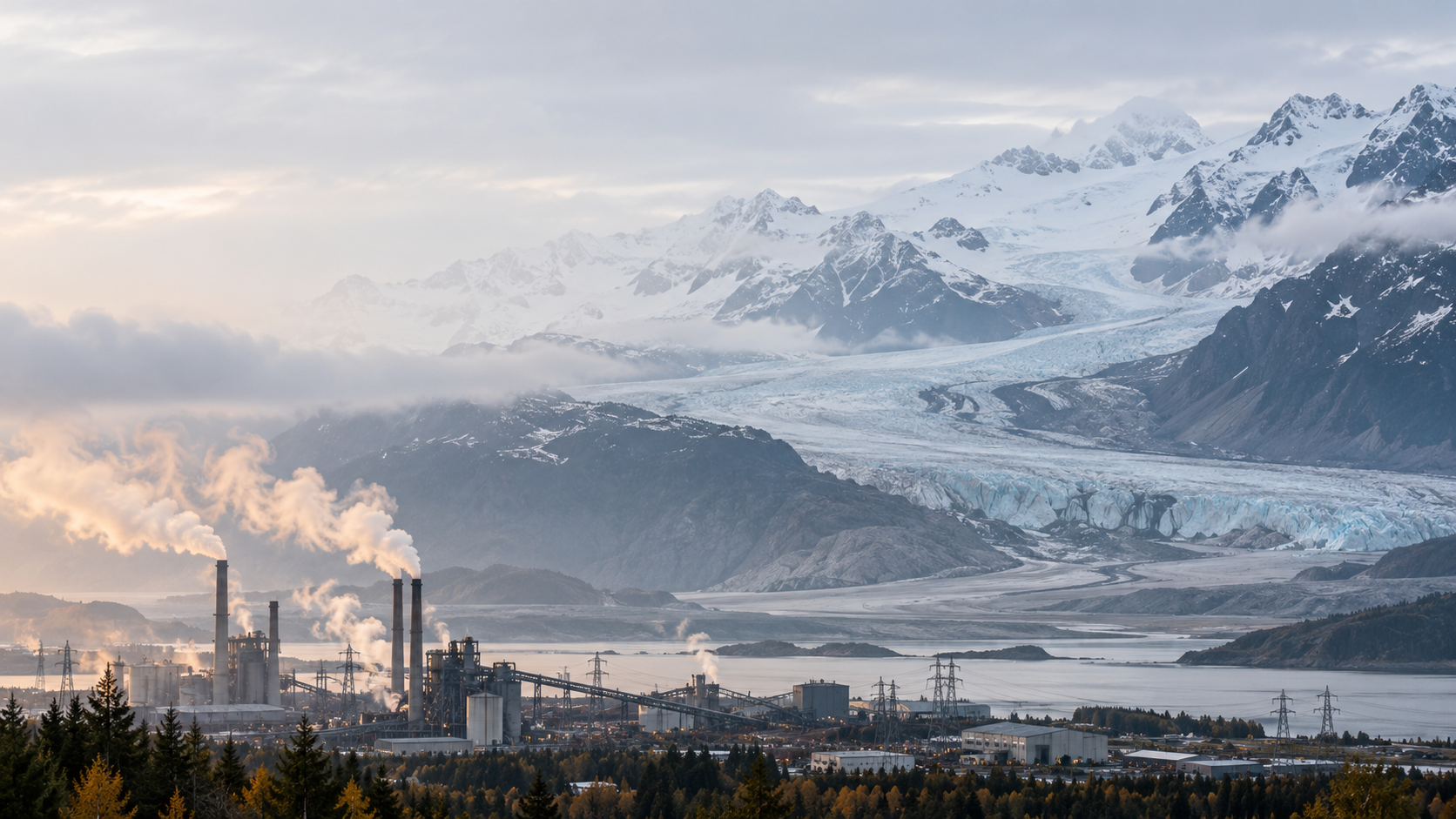
Could Earth Be Entering a New Ice Age?
Could Earth Be Entering a New Ice Age Without Climate Change?
Earth may have been moving gradually toward the early stages of another glacial period if human activity had not rapidly increased atmospheric greenhouse-gas concentrations. A recent study suggests that natural orbital conditions could have favored a long-term shift toward cooler conditions, while human-caused warming disrupted that trajectory Source 1.
This finding does not mean a sudden global freeze was about to begin. Glacial periods develop over thousands of years through interactions among Earth’s orbit, sunlight, snow, ice sheets, oceans, and atmospheric carbon dioxide.
It also does not make global warming beneficial. Instead, the study illustrates how strongly greenhouse gases can redirect Earth’s long-term climate path.
What the Study Says About the Next Ice Age
The study suggests that Earth’s natural climate trajectory may have become increasingly favorable to glacial conditions during the current geological era. Several factors determine whether that transition can begin:
- Earth’s orbital configuration.
- Northern Hemisphere summer sunlight.
- Atmospheric carbon dioxide concentrations.
- Snow and ice feedbacks.
- Ocean and atmospheric circulation.
- The ability of large ice sheets to survive and expand.
When these factors align, relatively small changes in summer sunlight can determine whether winter snow melts completely. If snow survives from one year to the next, it can accumulate over centuries and eventually form large ice sheets.
Human emissions changed that baseline. Carbon dioxide from burning coal, oil, and gas increased the atmosphere’s heat-trapping capacity. Warmer conditions make it harder for snow to persist through summer, reducing the likelihood that ice sheets will begin sustained growth.
“Terminated” Does Not Mean Permanently Canceled
Descriptions of climate change “terminating” or “canceling” the next ice age can sound more absolute than the evidence supports. A more precise interpretation is that human warming has delayed or suppressed the conditions needed for glacial inception.
Future glacial timing will depend on carbon dioxide, methane, other human influences, and Earth’s orbital cycles. If greenhouse-gas concentrations remain elevated for a long period, the next glacial period could be postponed substantially. That does not necessarily mean glaciation has become impossible forever.
The study concerns a long-term climate trajectory, not an immediate forecast. A natural shift toward glacial conditions would begin with gradual changes in summer snowmelt, followed by expanding snowfields and ice sheets over many thousands of years.
How Natural Ice Ages Begin
Earth’s Orbital Cycles Control Seasonal Sunlight
Earth’s orbit and orientation change slowly through several cycles, often called Milankovitch cycles.
Eccentricity describes changes in the shape of Earth’s orbit around the Sun, from more circular to more elliptical forms.
Obliquity describes changes in Earth’s axial tilt. Greater tilt produces stronger seasonal contrasts, while smaller tilt produces milder seasonal differences, especially at high latitudes.
Precession describes the gradual change in the direction toward which Earth’s rotational axis points. This cycle affects which part of Earth’s orbit corresponds with each season.
These cycles do not substantially change the total sunlight Earth receives over a year. They change when and where sunlight arrives. That seasonal distribution matters greatly for ice-sheet formation.
Scientists pay particular attention to Northern Hemisphere summer sunlight because most of the planet’s large continental land areas are located there. Cooler northern summers provide the conditions needed for snow to survive.
Why Cool Northern Summers Matter
Ice sheets grow when snowfall exceeds summer melting for long periods. The process begins gradually:
- A cooler summer leaves more winter snow on the ground.
- Remaining snow increases the surface’s reflectivity.
- The brighter surface absorbs less solar energy.
- Regional temperatures decline further.
- Snow accumulates and eventually compresses into glacial ice.
Snow and ice reflect sunlight, a property known as albedo. Fresh snow reflects much more incoming sunlight than soil, vegetation, or open water. As the reflective area expands, the surface absorbs less energy and cooling intensifies.
Orbital cycles do not act alone. Carbon dioxide, ocean circulation, dust, vegetation, precipitation, and continental geography also influence whether an ice sheet can grow.
Ice Sheets Amplify Initial Cooling
Large ice sheets affect climate beyond their immediate locations. Their bright surfaces reflect solar energy, while their weight can alter land levels and atmospheric circulation. Growing ice sheets also store water that would otherwise remain in the oceans, lowering global sea levels.
Cooling can change precipitation patterns. Some regions may receive more snowfall, while others become drier. Winds can transport dust across continents, and airborne particles can affect snow reflectivity and melting.
These feedbacks help explain why a modest orbital change can eventually produce a much larger climate response.
Why Carbon Dioxide Can Delay an Ice Age
Carbon dioxide absorbs some of the infrared radiation Earth emits after absorbing energy from the Sun. It then re-emits energy in different directions, reducing the rate at which heat escapes directly to space.
Higher carbon dioxide levels raise the climate system’s baseline temperature. Carbon dioxide acts together with water vapor, methane, clouds, aerosols, oceans, snow, and ice. These components interact through feedbacks, so the overall warming effect is greater than the direct influence of carbon dioxide alone.
For example, warmer air can hold more water vapor, which is itself a powerful greenhouse gas. Melting snow and ice reduce albedo, allowing darker land and ocean surfaces to absorb more sunlight. Oceans absorb heat and carbon dioxide, but their circulation and chemical responses unfold over different timescales.
Under orbital conditions that favor cooler northern summers, Earth may gradually lose heat. Human emissions introduce a competing influence through rapidly increasing greenhouse-gas concentrations. A warmer baseline makes it harder for snow to survive summer, even when orbital conditions reduce northern summer sunlight.
The result is not a cancellation of natural variability. Orbital cycles and natural climate fluctuations continue, but human emissions change the background conditions in which they operate.
What Human Climate Change Has Altered
Burning coal, oil, and natural gas has released large quantities of carbon dioxide. Human sources also include methane from fossil-fuel production, agriculture, and waste; land-use change; industrial processes; and cement manufacturing.
The speed of this forcing distinguishes modern climate change from most natural orbital shifts. Fast responses include:
- Rising average temperatures.
- More frequent and intense heat extremes.
- Declining snow cover in many regions.
- Shifts in rainfall and drought patterns.
Slower responses include:
- Ocean warming.
- Ice-sheet retreat.
- Sea-level rise.
- Ecosystem redistribution.
- Changes in soil and vegetation carbon.
The ocean absorbs much of the excess heat associated with global warming. This delays some surface responses but does not remove the energy from the climate system. Ice sheets and oceans can continue responding long after emissions decline.
Delaying an Ice Age Is Not a Climate Benefit
A delayed glacial period does not offset the dangers of rapid warming. The two scenarios operate on different timescales and affect societies differently.
A future ice age would develop gradually over thousands of years. Modern warming is already affecting human health, infrastructure, agriculture, water availability, ecosystems, and coastal communities. Current risks include:
- Dangerous heat exposure.
- Drought and water shortages.
- Flooding from intense rainfall.
- Conditions that favor some wildfires.
- Crop losses.
- Coral and ecosystem stress.
- Sea-level rise.
- Damage to roads, buildings, and power systems.
The study demonstrates the power of greenhouse gases, not the safety of warming.
Ice Age, Glacial Period, and Interglacial
An ice age is a long geological interval during which Earth has permanent ice sheets or glaciers. Earth is currently in an ice age because Greenland and Antarctica retain large, persistent ice sheets.
A glacial period is a colder phase within an ice age, when continental ice sheets expand and global sea levels fall. The most recent glacial period ended approximately 11,700 years ago.
An interglacial is a relatively warm interval between glacial periods. The present Holocene is an interglacial period within the current ice age.
Interglacials can last thousands to tens of thousands of years. Their duration depends on orbital conditions and atmospheric composition. Human greenhouse-gas emissions have altered the conditions that would otherwise influence the timing of the next glacial transition.
Evidence Scientists Use to Reconstruct Past Climate
Scientists compare evidence from ice, ocean sediments, landforms, fossils, and biological systems rather than relying on a single record.
Ice Cores
Ice cores contain bubbles of ancient atmosphere trapped in snowfall. By analyzing these bubbles, scientists can estimate past concentrations of carbon dioxide and methane. Chemical markers and stable isotopes provide information about temperature, precipitation, volcanic activity, and atmospheric dust.
In general, deeper ice represents older climate conditions, although ice flow and local conditions must be considered. Ice-core records provide strong evidence that greenhouse-gas concentrations and global temperature have changed together across repeated climate cycles.
Ocean and Lake Sediments
Sediment layers preserve microfossils, pollen, dust, minerals, and chemical signatures. Marine sediments reveal changes in ocean temperature, ice volume, and circulation. Lake sediments preserve evidence of regional rainfall, vegetation, fire, and temperature.
Because sediments accumulate over long periods, they help scientists identify gradual climate transitions and abrupt events.
Geological and Biological Evidence
Past glaciation leaves physical marks on landscapes. Moraines, scratched bedrock, glacial valleys, and transported rocks show where ice once moved. Fossils and pollen reveal how plants and animals responded to changes in temperature and precipitation.
Tree rings, coral growth bands, and other biological records provide higher-resolution evidence for more recent climate variations. Agreement among independent records increases confidence in paleoclimate reconstructions.
What Climate History Reveals About Future Warming
Earth’s climate history includes periods substantially warmer than the modern preindustrial climate. These intervals help scientists examine how elevated greenhouse-gas concentrations affected oceans, ice sheets, ecosystems, and atmospheric circulation Source 3.
These periods are not exact forecasts. Continents occupied different positions, ice sheets had different sizes, ecosystems differed, and the Sun’s output was not identical. However, climate history shows that Earth can remain warmer for long periods when atmospheric composition changes.
Warming can continue after emissions fall because oceans and ice sheets respond slowly. Reducing emissions can limit additional warming without immediately reversing all existing changes.
How Wildlife Reflects a Changing Climate
The pika illustrates how climate-sensitive wildlife can reveal environmental change. These small mountain mammals generally live in cool, rocky habitats and depend on suitable temperatures, food, water, snow conditions, and connected habitat Source 5.
Warming can reduce suitable low-elevation habitat and force populations toward higher elevations. Mountains offer limited space, and species cannot migrate upward indefinitely. Habitat fragmentation, altered vegetation, drought, and changing seasonal timing add further pressure.
Some species adapt through migration, behavior, or genetic change. Adaptation becomes more difficult when warming occurs quickly, habitats are isolated, or food webs respond at different speeds.
Common Misunderstandings
“The Next Ice Age Was About to Happen”
The study does not indicate that a sudden ice age was imminent. Glacial inception is a gradual process lasting thousands of years.
“Global Warming and an Ice Age Cannot Coexist”
They can. Orbital cycles may favor gradual cooling while greenhouse gases produce warming. Human-caused warming currently dominates recent global temperature change, even though natural orbital cycles continue.
“Delaying an Ice Age Proves Emissions Are Beneficial”
It does not. Avoiding glaciation does not compensate for heat extremes, sea-level rise, ecosystem damage, and other consequences of rapid warming.
“Humans Control Every Climate Change”
Natural variability remains part of the climate system. The specific scientific conclusion is that human greenhouse-gas emissions are the dominant driver of recent global warming.
What Happens Next?
Future emissions will influence how long the next glacial period remains delayed. Lower emissions can reduce additional warming, but atmospheric carbon dioxide does not immediately return to preindustrial levels. Some effects will persist because oceans, ice sheets, and ecosystems respond slowly.
For societies, the most important risks unfold over decades and centuries. Priorities include reducing greenhouse-gas emissions, improving heat adaptation, protecting water supplies, strengthening flood defenses, conserving ecosystems, and designing resilient infrastructure.
Conclusion
Without human-caused greenhouse-gas emissions, Earth may have been moving gradually toward conditions favorable to a new glacial period. Orbital cycles could have reduced Northern Hemisphere summer sunlight, allowing snow to survive and ice sheets to expand. Higher carbon dioxide levels disrupted that trajectory by warming the climate and reducing the likelihood of persistent snow accumulation.
This scenario does not describe an impending freeze. It describes a long-term geological process that would unfold over thousands of years.
The broader lesson is clear: Earth’s climate is dynamic, but human emissions can redirect its natural course. A delayed ice age is not evidence that modern warming is safe. It is evidence that greenhouse gases are powerful enough to reshape the planet’s future.
Frequently Asked Questions
Would Earth really be entering an ice age today without climate change?
The study suggests that natural conditions may have become increasingly favorable for glacial inception. “Entering” refers to a gradual process lasting thousands of years, not an abrupt global temperature collapse.
Are we currently living in an ice age?
Yes. Earth remains in a broader ice age because Greenland and Antarctica contain permanent ice sheets. The Holocene is an interglacial period within that ice age.
How does carbon dioxide delay an ice age?
Higher carbon dioxide increases the atmosphere’s heat-trapping capacity. Warmer summers melt more snow, making it harder for large ice sheets to form and expand.
Does this study mean global warming is beneficial?
No. Delaying glaciation does not eliminate the present risks of rapid warming, including heat extremes, flooding, drought, ecosystem disruption, sea-level rise, and threats to food and water systems.
What is the difference between an ice age and a glacial period?
An ice age is a long geological interval with permanent polar ice. A glacial period is a colder phase within that interval when continental ice sheets expand.
Can a future ice age still occur?
A future glacial period remains possible over very long timescales. Its timing will depend on greenhouse-gas concentrations, orbital conditions, ice-sheet feedbacks, and other climate processes. Human emissions have significantly altered the natural conditions that would otherwise influence its onset.