NFL Trade Ideas: Henry to Patriots, Baker to Bills
NFL Trade Ideas: Derrick Henry to the Patriots, Budda Baker to the Bills
Hypothetical NFL trades attract attention because they connect roster weaknesses with available talent. One move can reshape an offense, strengthen a playoff contender, or accelerate a rebuilding plan.
A proposed CBS Sports list includes Derrick Henry moving to the New England Patriots and Budda Baker joining the Buffalo Bills. Neither scenario is a confirmed transaction. The supplied sources do not identify the other eight player-team pairings, so they cannot be named responsibly without speculation.
How to Evaluate Hypothetical NFL Trades
A trade can make football sense and still be difficult to complete. Teams must balance immediate production against draft capital, salary-cap flexibility, age, durability, and long-term roster planning.
Key questions include:
- Does the team have a genuine need?
- Does the player fit the scheme and projected role?
- What would the contract and compensation require?
- Does the move match the team’s competitive timeline?
Team Need
The best trades address a weakness that affects the starting lineup. A veteran addition has less value when the acquiring team already has adequate depth at the position.
Scheme and Player Fit
Production in one system does not guarantee identical results in another. Coaches must determine how a player’s skills translate to the team’s personnel, terminology, workload, and game plan.
Trade Cost and Contract Impact
Compensation could include draft picks, player swaps, salary adjustments, or a new contract. Exact terms should not be presented as fact unless reliable reporting confirms them. Contract guarantees and remaining salary can determine whether a strong football fit is financially practical.
Competitive Timeline
A contender may accept a short-term cost for postseason production. A rebuilding team should be more cautious about giving up premium draft assets for an aging veteran. Every trade communicates the organization’s view of its roster.
1. Derrick Henry to the New England Patriots
Henry to the Patriots is one of the clearest hypothetical fits in the available proposals. The move would give New England a powerful runner capable of changing the team’s offensive identity.
Why New England Could Need Henry
Henry could address several needs as an early-down runner, short-yardage option, goal-line threat, and clock-control weapon. His presence would force defenses to respect the run and could create more manageable passing situations.
A physical rushing attack could also reduce pressure on the quarterback. New England would not need to rely exclusively on long passing drives if Henry could produce consistently in the red zone and on third-and-short situations.
The fit would be strongest if the Patriots wanted to build around ball control, field position, and complementary football. Henry’s size and running style could help the offense close games after taking a lead.
How Henry Could Fit the Offense
The Patriots could use Henry on early downs, inside the 20-yard line, and in four-minute situations. A complementary back could handle passing downs, outside runs, and change-of-pace work.
That division of labor would be important. Henry’s value is greatest when he is not required to handle every offensive snap. A second back could protect him from excessive workload and give the offense more flexibility in passing situations.
Defenses would likely respond by placing additional defenders near the line of scrimmage. That could create opportunities for play-action passes, tight-end routes, and one-on-one matchups outside. Henry could therefore influence the passing game even without receiving the handoff.
Potential Benefits
- Better short-yardage efficiency.
- More red-zone options.
- Greater ability to control the clock.
- A stronger late-game identity.
- Less pressure on the passing offense.
- Veteran leadership in the backfield.
Risks and Questions
The main concerns are age, workload, durability, contract cost, and positional value. Running backs absorb significant contact, so New England would need to determine whether the expected production justified the compensation.
The Patriots would also need to consider their broader roster-building plan. Giving up meaningful draft capital for a veteran back could limit flexibility at positions such as offensive tackle, edge rusher, and cornerback.
Assessment: Strong football fit, but financial terms and the Patriots’ competitive timeline would determine the deal’s realism.
2. Budda Baker to the Buffalo Bills
Baker to the Bills is another hypothetical trade identified in the proposed list. The move would give Buffalo an experienced defensive back who could contribute in multiple roles.
Why Buffalo Could Target Baker
A versatile safety can improve a defense without being limited to one alignment. Baker’s potential value would include deep safety play, box support, communication, blitzing, and coverage against tight ends or slot receivers.
That flexibility matters against modern passing offenses. Quarterbacks and coordinators use motion, empty formations, stacked releases, and personnel mismatches to create communication errors. An experienced safety can help a defense adjust before and after the snap.
Buffalo could view Baker as a playoff-focused addition, particularly against opponents with explosive passing games. His experience would provide another veteran playmaker for a defense that must often defend quarterbacks who extend plays and attack every level of the field.
How Baker Could Fit Buffalo’s Defense
Baker could play alongside the Bills’ existing safeties rather than simply replace one starter. The coaching staff could use multiple-safety packages, rotate alignments, and disguise coverage until the snap.
For example, Baker could begin near the line before retreating into a deep zone. He could also align deep and rotate toward the box after the quarterback identified the formation. Such movement would make it harder to determine whether Buffalo planned man coverage, zone coverage, or pressure.
His presence could allow other defensive backs to specialize. One cornerback might receive more consistent outside assignments, while another safety could focus on deep coverage or run support.
Potential Benefits
- More flexibility in coverage design.
- Stronger communication against complex formations.
- Additional support against tight ends.
- Better run support from the secondary.
- More options for disguised pressure.
- Veteran depth during a long season.
Baker’s value would extend beyond tackles or interceptions. Safety play affects the structure of the entire defense, and a reliable communicator can reduce coverage mistakes while helping younger players execute their assignments.
Risks and Questions
The first issue is cost. Buffalo would need to determine how much draft capital and salary-cap space it could dedicate to another veteran defensive back.
The second issue is role clarity. If the Bills already had established starters at safety, the coaching staff would need a clear plan for Baker. A trade is less attractive when an incoming player creates duplication instead of addressing a specific weakness.
Age, contract length, and possible extension demands would also matter. Baker’s projected impact would need to justify the financial commitment while Buffalo preserved flexibility for other core players.
Assessment: Strong strategic fit if Buffalo wants more defensive versatility, but the deal would need a defined role and manageable cost.
The Other Eight Proposed Trades
The supplied summaries confirm that the CBS Sports article contains 10 hypothetical NFL trades, but they identify only Henry-to-New England and Baker-to-Buffalo. The remaining eight pairings cannot be verified from the available material.
The player, destination, role, compensation, and contract situation for Trades 3 through 10 are therefore unknown. Assigning unnamed players to teams or inventing compensation packages would be irresponsible.
A separate Athletic source reportedly discusses a 2026 trade-deadline board featuring 50 potential trade candidates, but the supplied summary does not name those players or establish a connection to the CBS Sports list.
Ranking the Available Trades by Realism
Most Realistic
Henry to New England could be realistic if the Patriots have a clear need for power running and the acquisition cost remains modest. Running back trades can be easier to structure than deals involving premium pass rushers or quarterbacks, although the position’s market value may limit seller expectations.
Baker to Buffalo also makes football sense, but the Bills would need to create a defined role and fit the contract into their broader salary-cap plan.
Biggest Potential Impact
Henry could immediately change the Patriots’ offensive identity. His presence would affect rushing efficiency, red-zone play-calling, clock management, and defensive alignment.
Baker could have a broader structural impact for Buffalo. A versatile safety can change how a defense disguises coverage and deploys pressure, although that value may be less visible in basic statistics.
Most Difficult to Complete
Both deals could become difficult if the selling team demands significant draft capital or if the player’s contract requires a substantial financial commitment. A good football fit does not guarantee a trade. Team timelines, ownership preferences, contract guarantees, and draft-pick value all influence the final decision.
What These Trade Ideas Say About Team Building
Veterans Remain Valuable to Contenders
Contending teams often target veterans because immediate production can matter more than long-term development. A proven player may help during a playoff push, particularly when the roster has one identifiable weakness.
The risk is paying for past production. Teams must determine whether the veteran can deliver enough value during the remaining contract period.
Running Back Trades Require Careful Analysis
The Henry proposal illustrates the tension surrounding veteran running backs. A productive power runner can improve an offense immediately, but age, workload, injury risk, and positional value affect the trade calculation.
New England would need to compare Henry’s expected contribution with the acquisition cost and the opportunity cost of using draft capital at another position.
Versatile Defensive Backs Have Strategic Value
The Baker proposal demonstrates why safeties with multiple skills remain important. A safety who can cover, tackle, communicate, blitz, and rotate alignments gives a coordinator more ways to challenge opposing quarterbacks.
That versatility becomes especially valuable in the postseason, when teams repeatedly face elite passing attacks and must adjust quickly from week to week.
Trade Rumors Need Context
A media proposal is not the same as a reported negotiation. Team interest is not an agreement, and an agreement is not complete until the transaction becomes official.
Readers should distinguish among:
- A hypothetical trade idea.
- A report of team interest.
- A confirmed negotiation.
- A completed transaction.
Based on the supplied sources, the Henry and Baker scenarios belong to the first category.
Final Verdict
Henry to the Patriots may be the stronger offensive fit. His power running, red-zone value, and clock-control ability could give New England a clear identity while supporting its passing attack.
Baker to the Bills may offer the stronger defensive fit. His versatility could help Buffalo disguise coverages, improve communication, and add an experienced playmaker to the secondary.
The more realistic move would depend on compensation, contract structure, and each team’s competitive timeline. Neither transaction is confirmed, and the other eight proposed trades cannot be verified from the supplied information.
FAQ
Is Derrick Henry actually being traded to the Patriots?
No confirmed transaction is established by the supplied sources. Henry to New England is presented as a hypothetical CBS Sports proposal.
Is Budda Baker going to the Bills?
The available source identifies Baker to Buffalo as a proposed trade, not a completed or confirmed deal.
What makes Derrick Henry a fit for New England?
His power running, short-yardage production, red-zone value, and ability to control game tempo could strengthen the Patriots’ offense.
Why would the Bills pursue Budda Baker?
Baker’s experience, versatility, communication, run support, and coverage flexibility could give Buffalo more options in the secondary.
How should fans judge hypothetical NFL trades?
Evaluate team need, scheme fit, age, durability, contract cost, draft compensation, positional value, and the organization’s competitive timeline.
Where can readers find the other eight proposed trades?
The complete CBS Sports article should be consulted for the remaining player-team pairings. Those proposals require verification because the supplied summaries do not identify them.
Sources
Artikel Terkait
-
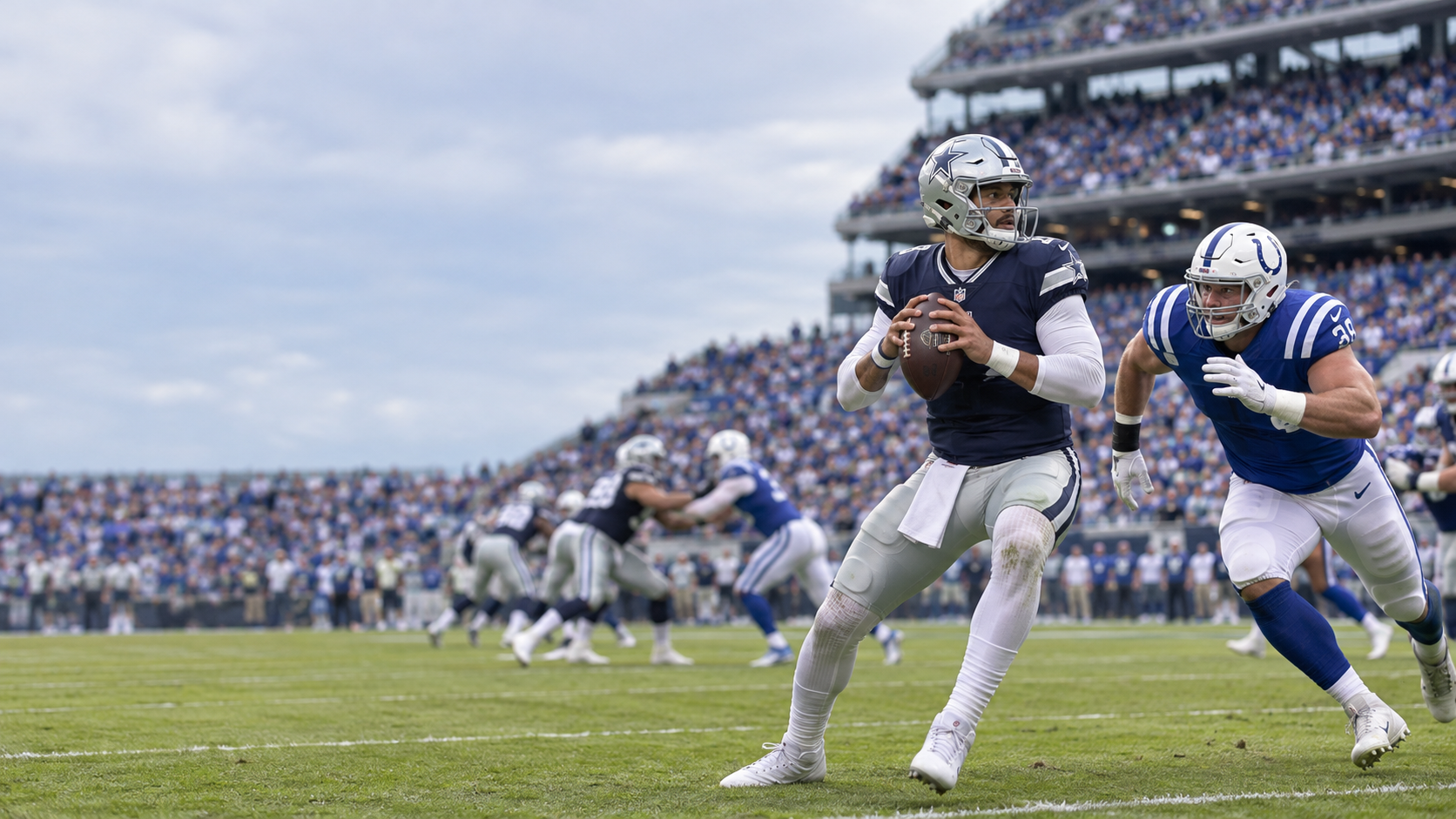 Cowboys vs. Colts Live Score and Stats: Nov. 8, 2026
-
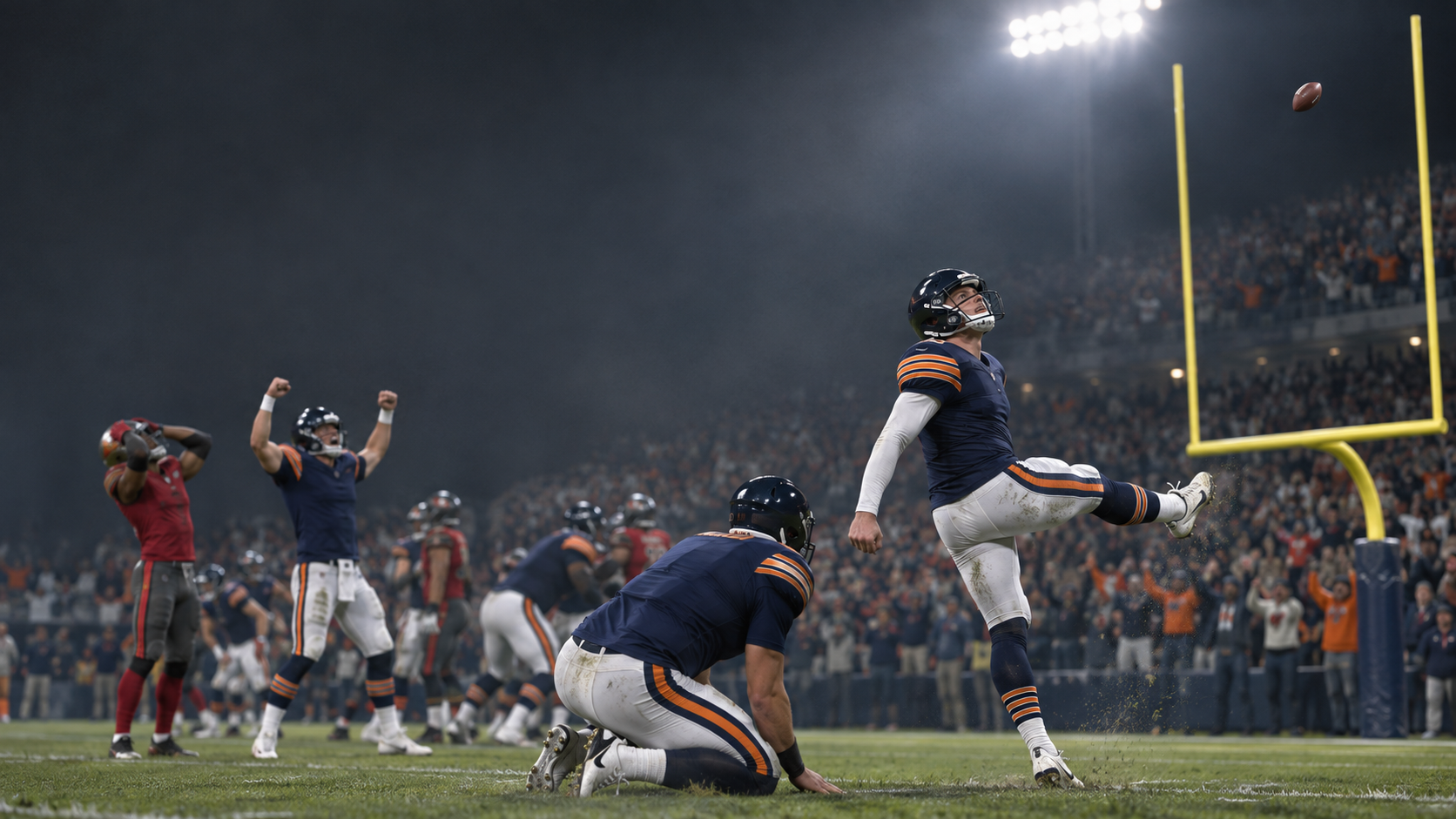 Bears Edge Buccaneers 27–24 on Santos Walk-Off Kick
-
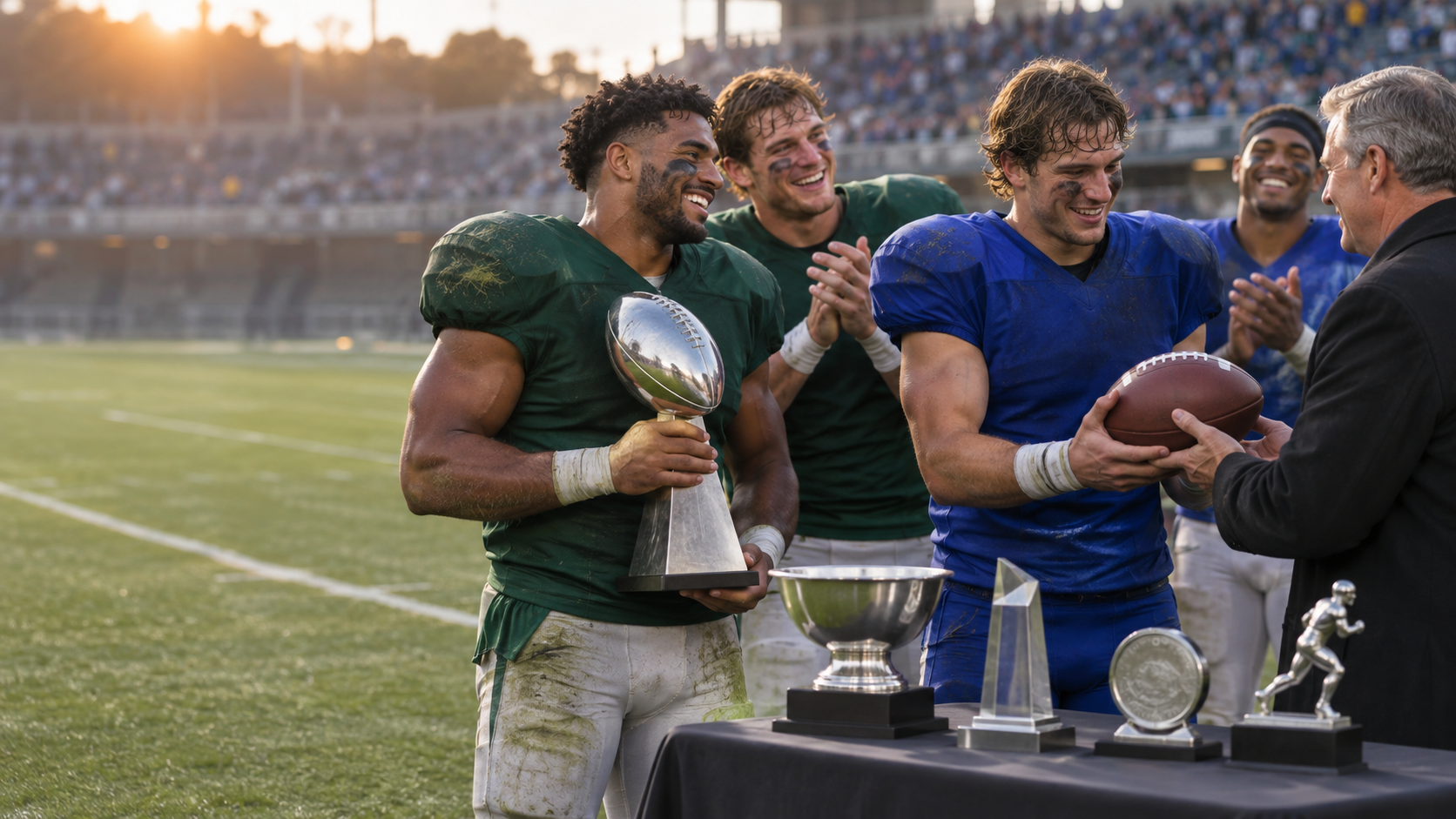 Eagles-Giants Awards: What the Evidence Confirms
-
 Manchester United 4-4 Aston Villa: Late Comeback
-
 Philip Rivers Emerges as Top NC State Coaching Candidate
-
 Lando Norris Goes Viral After Brazilian GP Podium Mishap