Pope Leo’s Argentina Visit Tests Milei’s Austerity
Pope Leo’s Argentina Visit Tests Milei’s Austerity
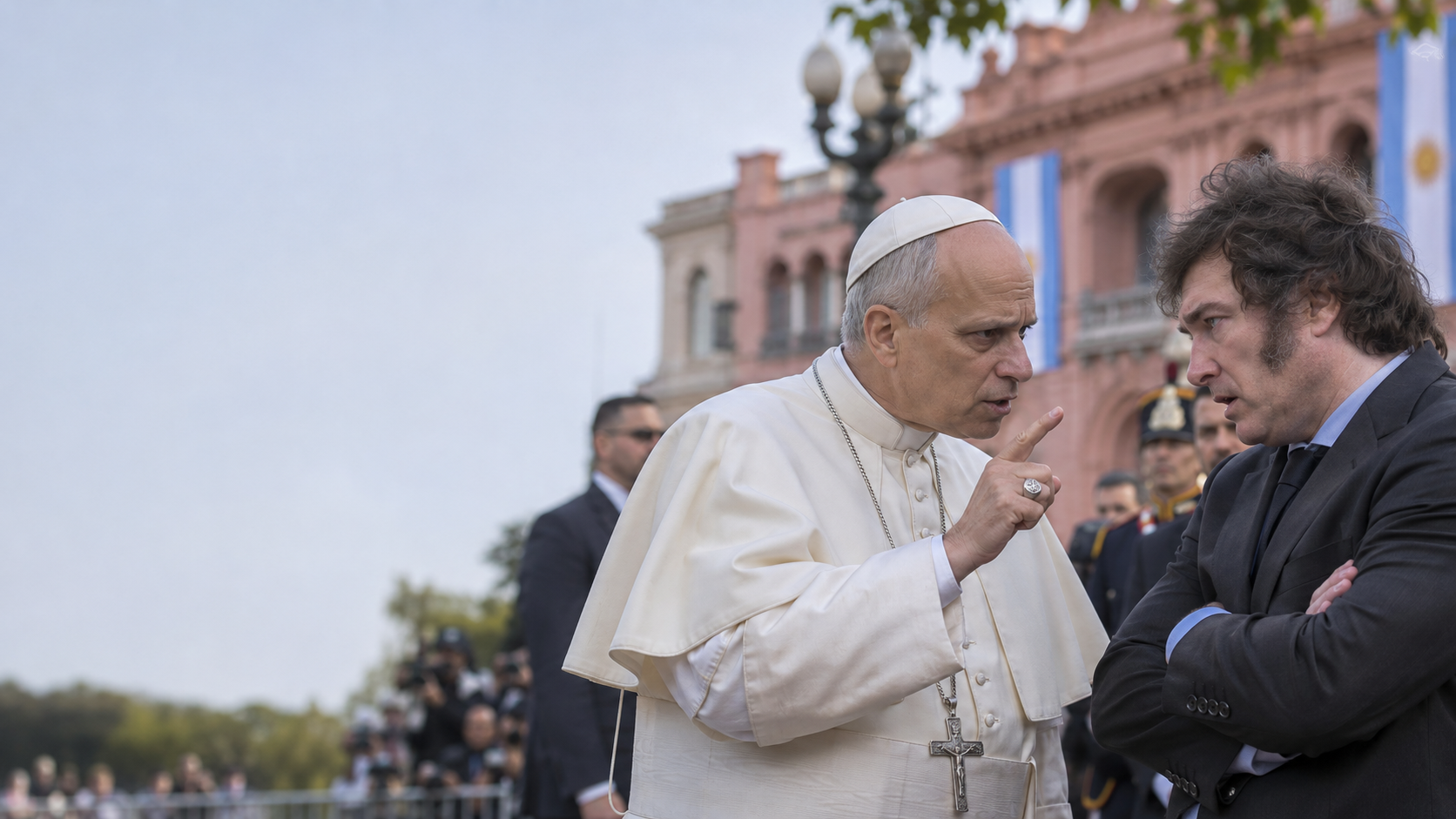
Pope Leo’s planned visit to Argentina is emerging as a major religious event with significant political consequences. The trip would bring him into direct contact with a country where the Catholic Church has increasingly challenged President Javier Milei’s government, particularly over spending cuts and their effects on vulnerable communities. Source 3
The visit would also take place against the backdrop of Argentina’s forceful economic restructuring and international tensions related to the Iran crisis. Reuters describes the trip as a moment when disagreements over austerity, diplomacy and national priorities could become more visible. Source 5
At stake is more than the tone of a papal meeting. Pope Leo represents a Catholic tradition centered on human dignity, solidarity and concern for the poor. Milei’s administration emphasizes fiscal discipline, reduced state intervention and market-oriented reform. These positions can coexist in dialogue, but they often disagree over who should bear the cost of economic adjustment.
Why the Visit Matters
Argentina has a strong Catholic identity, and the church remains influential in public life. Catholic organizations operate community programs, assist low-income households and participate in debates over social policy.
A papal visit could draw attention to poverty, inequality, social peace and the treatment of vulnerable people. Even without direct political intervention, Pope Leo’s speeches and meetings could shape the national debate over Milei’s economic program.
The trip should therefore be understood on two levels: as a pastoral event involving the pope, bishops and Catholic communities, and as a national moment that could make Argentina’s political divisions more visible.
The Guardian characterizes the planned trip as a potential confrontation between the pope’s social and economic outlook and what it describes as Milei’s “hyper-capitalist” agenda. Source 7
The Dispute Over Austerity
Milei’s economic agenda seeks to reduce government spending and limit the state’s role. Its stated goals include controlling fiscal deficits, restoring stability and encouraging private-sector activity.
Supporters see spending cuts as necessary after years of economic instability. They argue that fiscal discipline can restore confidence, attract investment and create conditions for growth. Critics counter that households may experience the costs of adjustment before its promised benefits appear.
Workers, pensioners, low-income families and communities dependent on public services may face immediate pressure. This creates the central conflict between the government and the Catholic Church: Milei emphasizes long-term stabilization through fiscal restraint, while church leaders focus on the people affected by the adjustment.
Reporting on the planned visit describes the Catholic Church as opposing aspects of Milei’s spending reductions, particularly where they affect poor households and social assistance. Source 9
The church’s concerns reflect Catholic social principles including:
- Human dignity
- Protection of vulnerable people
- The common good
- Solidarity
- Social responsibility
- Support for families and communities
These principles do not require unlimited public spending. Catholic social teaching can recognize the importance of responsible government and sustainable finances. However, it generally rejects the idea that economic efficiency should outweigh the needs of people facing hunger, unemployment or the loss of essential services.
The disagreement therefore concerns not only whether austerity exists, but also its scale, speed and distribution. Church leaders may ask whether the greatest burden is falling on those with the fewest resources.
The Church as a Social Safety Net
Catholic organizations provide food, counseling, shelter and other assistance. When government programs are reduced, demand for these services can increase.
The conflict is therefore practical as well as ideological. The administration may seek to reduce public spending, while church institutions receive more requests for help from families affected by those reductions. The church can argue that social protection is a public responsibility that cannot be transferred entirely to charities. The government can respond that private organizations and local communities should play a larger role.
A meeting with church leaders or a visit to disadvantaged communities would highlight the consequences of economic reform, whether or not Pope Leo directly criticizes Milei.
Competing Visions of Government
Pope Leo’s likely public emphasis will center on social inclusion, poverty reduction, peace and dialogue. These themes are consistent with the Catholic social tradition, which treats economic life as a means of serving human development rather than an end in itself.
He may stress that economic policy should protect people who cannot absorb sudden shocks and call for cooperation among political leaders, businesses, workers and civil society. This would not amount to a detailed alternative fiscal plan. The pope’s influence is more likely to come through moral priorities: who receives protection, who carries the burden and whether national decisions preserve human dignity.
Milei’s approach places greater emphasis on markets, private initiative and individual economic freedom. It rejects expansive state programs and treats fiscal reduction as a condition for recovery. The dispute is not simply religious; it concerns the proper role of government and the obligations of the state.
Milei’s supporters may argue that a smaller state creates opportunity and prevents economic collapse. Church critics may respond that markets alone cannot guarantee access to food, health care or education.
Pope Leo may avoid explicit partisan criticism. The disagreement could instead appear through sermons about poverty, addresses on social responsibility, meetings with Argentine bishops, visits to disadvantaged communities and appeals for dialogue.
Indirect criticism can still have political consequences. Opponents of Milei may treat a papal message about hardship as confirmation of their position, while the president may present the visit as evidence of national unity and international legitimacy.
Relations Between the Church and Milei’s Government
Reporting describes Argentina’s Catholic Church as being at odds with Milei’s government over spending cuts, support for vulnerable communities and the social consequences of the administration’s economic language. Source 3
This does not necessarily mean a complete institutional break. The church and government can cooperate on community assistance, public health and social services while disagreeing over economic policy. Both have reasons to avoid open escalation: the church needs access to officials and resources for social work, while Milei may not want to alienate a major national institution or appear hostile to the pope.
Argentina’s bishops, priests and Catholic organizations could use the visit to elevate concerns about food security, workers, low-income families and social peace. Milei may emphasize respect for the pope, Argentina’s Catholic identity and the necessity of economic recovery.
His political challenge is to defend austerity without appearing indifferent to hardship. He may frame the disagreement as a policy debate rather than a moral dispute, acknowledging the church’s concern for the poor while arguing that inflation, debt and fiscal deficits also harm vulnerable people.
The Iran Crisis and Foreign Policy
The Iran crisis adds a dimension beyond Argentina’s domestic economic debate. Reuters identifies it as one source of tension surrounding the visit. Source 5
International crises can test the relationship between papal diplomacy and government foreign policy. A pope may emphasize peace, dialogue, de-escalation and civilian protection. A government may prioritize strategic partnerships, security concerns and a clear diplomatic position.
Without attributing unconfirmed statements to Pope Leo, likely themes surrounding papal diplomacy include peace, restraint, humanitarian protection, international cooperation, dialogue and de-escalation.
Milei may seek to maintain firm international partnerships and a clear position on security. The potential tension is straightforward: Pope Leo may prioritize restraint and humanitarian concerns, while the government may prioritize alliances and security calculations.
Three Possible Outcomes
1. A carefully managed show of unity
Pope Leo and Milei could appear together and emphasize mutual respect, national identity and social peace without directly addressing austerity. The government could present the meeting as a diplomatic success, while the church preserves its criticism through broader messages about poverty and responsibility.
2. A public clash over austerity
The pope could focus strongly on poverty, inequality and the consequences of spending cuts. Local church leaders might issue sharper criticism, prompting Milei to defend fiscal discipline. The trip could become a symbolic confrontation over Argentina’s economic direction.
3. A limited but meaningful dialogue
The pope could raise concerns privately or indirectly, while Milei recognizes the church’s social role without changing his economic program. This would not produce an immediate policy reversal but could create channels for discussion about food programs, employment, health care and support for low-income households.
What to Watch During the Visit
Observers should focus on:
- Whether Pope Leo and Milei meet privately or publicly
- References to austerity, poverty, inequality, social spending, Iran or peace
- Statements from Argentina’s bishops and Catholic organizations
- Any government announcements involving social programs
- Public and media reactions from communities, opposition parties, labor groups and businesses
The tone will matter. Language centered on unity would suggest a carefully managed relationship. Direct references to hardship or spending cuts would indicate greater tension.
Conclusion
Pope Leo’s planned Argentina visit sits at the intersection of religion, economics and geopolitics. Milei’s government argues that austerity, fiscal discipline and a smaller state are necessary for recovery. Argentina’s Catholic Church emphasizes social protection, human dignity and concern for people affected by economic hardship.
The Iran crisis adds a diplomatic test. Pope Leo may emphasize peace, dialogue and humanitarian responsibility, while Milei’s government may focus on strategic alliances and security.
The visit is unlikely to produce an immediate change in Argentina’s economic policy. Its importance lies in testing competing visions of government, economic justice and national responsibility in public.
The central question is whether Pope Leo and Javier Milei can maintain dialogue while disagreeing over how Argentina should confront poverty, economic crisis and global instability.
Frequently Asked Questions
Why is Pope Leo traveling to Argentina?
Pope Leo is expected to meet Argentina’s Catholic Church and engage with the country’s religious and national life. The visit carries added political significance because of tensions between church leaders and Javier Milei’s government.
Why are Pope Leo and Javier Milei expected to disagree?
The main disagreement concerns Milei’s austerity policies and their social effects. The Catholic Church emphasizes support for vulnerable people and social responsibility, while Milei promotes fiscal reduction, market-oriented reform and a smaller state.
What does Argentina’s Catholic Church oppose in Milei’s policies?
The church is reported to oppose aspects of Milei’s spending cuts, especially where they affect poor households and social assistance. Its concerns reflect Catholic priorities involving human dignity, solidarity and protection for vulnerable communities.
How could the Iran crisis affect the visit?
The Iran crisis adds a foreign-policy and diplomatic dimension. Pope Leo may emphasize peace, dialogue and humanitarian protection, while Milei’s government may focus on security, strategic partnerships and Argentina’s international position.
Could the visit become a political confrontation?
Yes. The trip could become confrontational if papal remarks directly criticize austerity or if Milei publicly rejects the church’s concerns. It could also remain carefully managed, with both sides emphasizing respect while maintaining different policy positions.
Will Pope Leo’s visit change Argentina’s economic policy?
A visit alone is unlikely to produce an immediate policy reversal. Its impact will depend on public statements, church pressure, political reactions and whether the government responds to concerns about poverty and the social consequences of austerity.
Artikel Terkait
-
 Pope Leo Rebukes Milei’s Austerity in Argentina
-
 Colombia Retaliatory Strike: What We Know
-
 Egypt Train Crash Kills 7 and Injures at Least 125
-
 Europe Joins U.S.-Brokered Ukraine Talks in Abu Dhabi
-
 Philadelphia Diners Back Jewish-Owned Restaurants After Boycott
-
 Trump Says He Was Joking About Dana White as Press Secretary